




Articolo precedente
In modern furniture and interior design, surface materials are no longer evaluated by appearance alone. As consumers become more sensitive to touch, detail, and long-term product quality, designers are increasingly looking for decorative surfaces that combine visual sophistication, tactile depth, durability, and manufacturing efficiency .
Leather has always been associated with premium interiors. Its natural grain, subtle irregularities, and soft visual character can bring warmth and sophistication to furniture. However, genuine leather is not always the most practical solution for large-scale furniture production. Material cost, installation complexity, maintenance requirements, consistency, and processing efficiency can all become challenges.
This is where Leather Design Melamine Board offers a different approach.
YAKCO Leather Design Melamine Board translates the visual language and tactile character of leather into an engineered decorative surface. By combining decorative paper, thermosetting resin technology, precision embossing, and high-pressure hot pressing, it creates a surface that is designed not simply to imitate leather visually, but to reproduce the three-dimensional relationship between pattern, light, and touch .
To know more about yakco Leather Design Melamine Board
From Visual Imitation to Tactile Surface Design
Traditional decorative boards often depend primarily on printed patterns. The image creates the appearance of wood, stone, fabric, or leather, but the surface itself may remain relatively flat.
Leather is different.
One of the defining characteristics of natural leather is its surface structure. Fine grains, pores, wrinkles, and variations create a tactile experience that cannot be fully reproduced through printing alone.
For this reason, the development of leather-inspired decorative boards is increasingly moving from 2D visual reproduction toward 3D surface engineering .
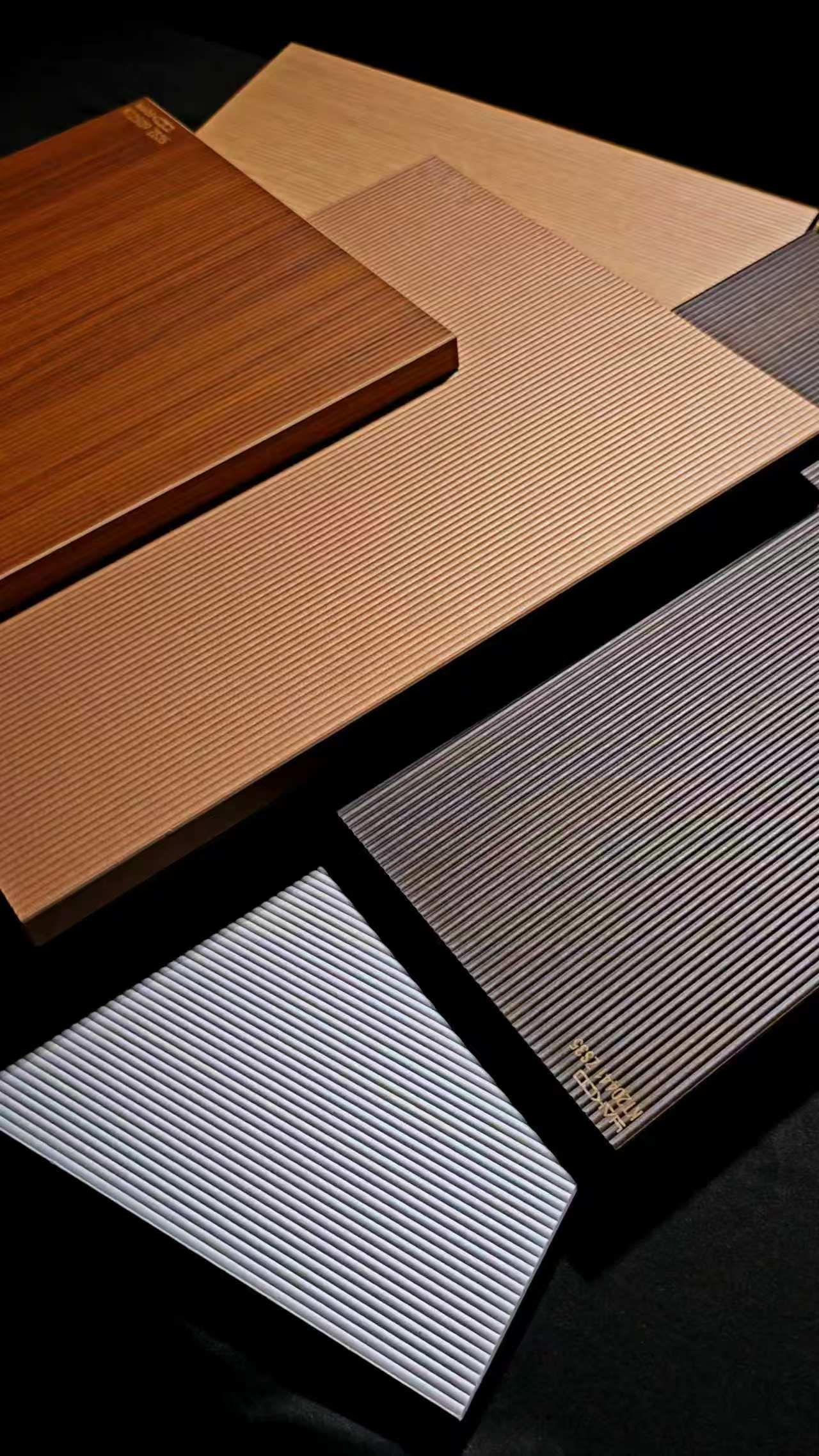
YAKCO Leather Design Melamine Board incorporates embossed surface structures that interact with the decorative pattern. The resulting micro-relief changes the way light is reflected across the panel, creating subtle highlights and shadows that give the surface greater depth.
The visual effect is therefore not static.
Under different lighting conditions, the same board can present different levels of contrast and texture, making furniture surfaces appear richer and more refined.
This approach is consistent with the broader shift in modern interior design from purely visual decoration toward sensory design , where touch and material perception become part of the overall user experience.
Why Leather Texture Works So Well in Contemporary Interiors
Leather occupies a unique position in material design because it combines luxury with familiarity.
Unlike highly decorative metallic or glossy surfaces, leather-inspired textures can create a warmer and more understated premium aesthetic. This makes them particularly suitable for modern interiors where designers want to achieve a sophisticated atmosphere without making the space feel overly decorative.
Depending on the embossing pattern and color, leather textures can support several design directions:
Modern Minimalism
Fine-grain leather textures can soften large furniture surfaces while maintaining a clean and restrained appearance.
Contemporary Luxury
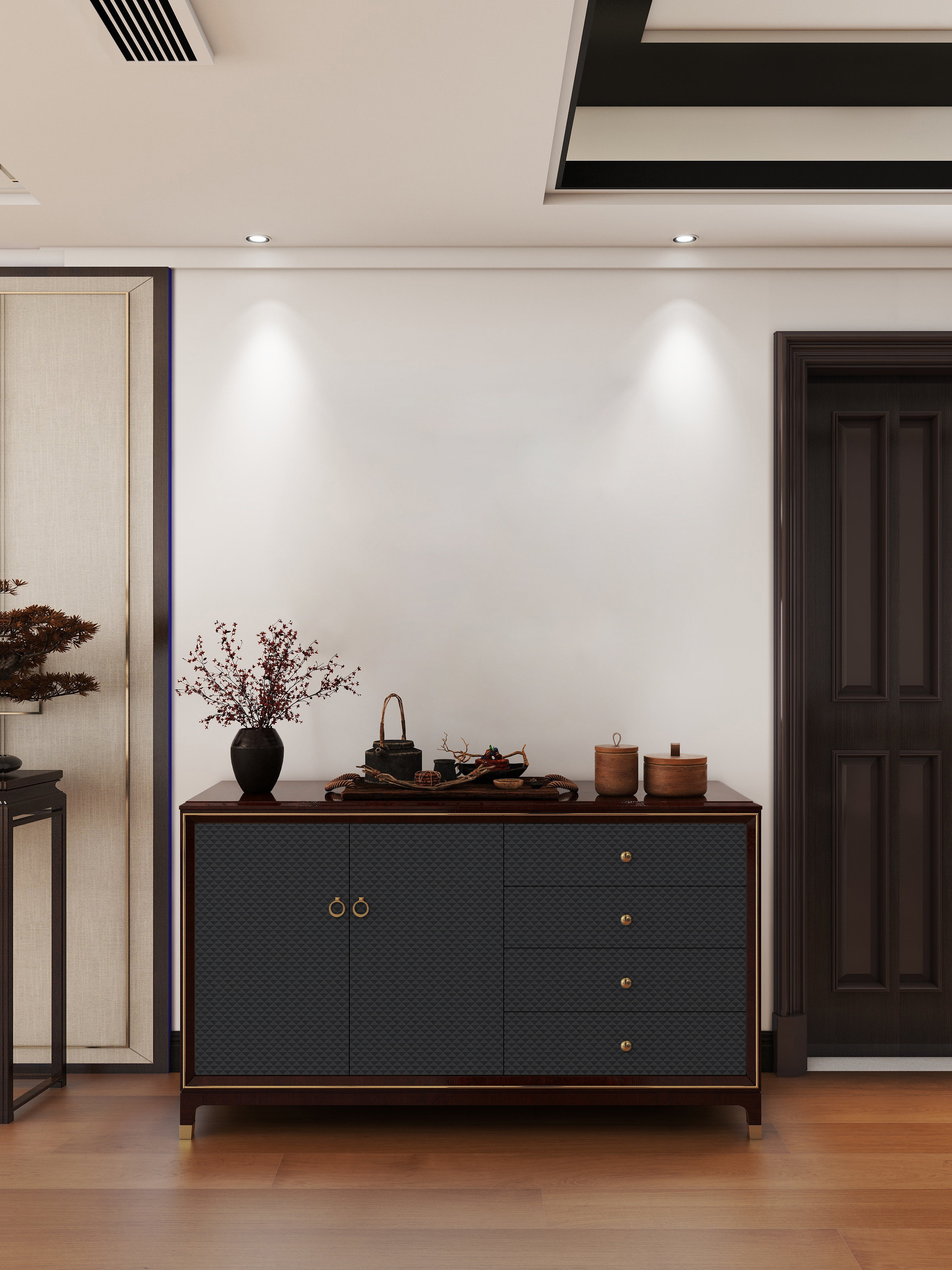
Deep and structured leather textures can introduce visual depth to wardrobes, cabinets, reception desks, and feature walls.
Executive Interiors
Leather-inspired surfaces naturally complement office furniture, conference rooms, executive desks, and hospitality environments.
Boutique and Retail Design
The tactile appearance of leather can reinforce premium brand positioning and create a stronger sensory connection with customers.
This makes leather-effect decorative boards considerably more versatile than their traditional association with classic furniture might suggest. YAKCO also identifies residential, hospitality, retail, and corporate environments as important application scenarios for leather-textured decorative surfaces.
Embossing Is the Core of a Realistic Leather Effect
A convincing leather surface depends on much more than a printed image.
The key is the relationship between the decorative pattern and the physical embossing structure.
During the manufacturing process, decorative paper impregnated with thermosetting resin is pressed onto the substrate under controlled temperature and pressure. The embossing plate transfers a specific surface structure into the decorative layer.
This creates a surface in which visual grain and physical texture work together .
The result has three important advantages.
1. Greater Visual Depth
Raised and recessed structures create natural changes in light and shadow. Even under simple interior lighting, this can make large furniture surfaces feel more three-dimensional.
2. A More Authentic Touch
When users touch the surface, they do not simply encounter a printed pattern. They can physically perceive the relief structure, making the material experience closer to genuine leather.
3. Stronger Material Identity
A well-designed embossed texture allows furniture manufacturers to move beyond conventional flat wood or solid-color surfaces and establish a distinctive material language.
For YAKCO, the value of leather design therefore lies not simply in “printing leather on a board,” but in transforming the texture itself into an engineered surface structure .
The Substrate Matters as Much as the Surface
There is an important engineering principle behind embossed decorative boards:
A sophisticated surface texture can only perform consistently when the substrate provides sufficient structural stability.
Embossing is a mechanical process. The substrate needs to withstand the pressure and temperature involved in pressing while maintaining its dimensional integrity.
For furniture manufacturers, this directly affects several practical factors:
- texture consistency
- dimensional stability
- machining performance
- edge processing
- screw holding capability
- resistance to deformation during use
The YAKCO test report supplied for this article provides a useful reference for the performance of its tested surface-decorated particleboard construction. The 18 mm sample recorded a density of 0.72 g/cm³ , internal bond strength of 0.36 MPa , and screw-holding values of 1110 N on the face and 860 N on the edge . The tested values were judged as passing against the stated requirements.
These figures are particularly relevant when decorative boards are converted into actual furniture components, because the decorative surface is only one part of the final product. The substrate determines whether the board can reliably support machining, assembly, hardware installation, and everyday use.
Designed for Everyday Durability
Premium appearance has limited value if a furniture surface cannot withstand daily use.
For this reason, performance testing is an important part of evaluating a decorative board.
According to the supplied test report, the tested surface-decorated PB sample passed evaluations covering:
- resistance to high-low temperature cycles
- surface scratching
- surface wearing
- cigarette burns
- dry heat
- surface staining
- cracking
- vapor resistance
The report recorded a surface wear value of 57 mg/100r , against a stated permitted value of ≤80 mg/100r. The surface also passed the specified scratching test at 1.50 N.
The remaining test results were also recorded as passing, including Grade 4 for cigarette-burn resistance, Grade 5 for dry-heat resistance, Grade 4 for surface staining, Grade 5 for cracking resistance, and Grade 5 for vapor resistance .
These results provide a performance reference for the tested board construction and demonstrate that a premium decorative surface can be engineered not only for appearance, but also for practical durability.
Importantly, the supplied report specifically describes the tested product as surface-decorated particleboard with paper impregnated with thermosetting resins . Therefore, these test values should be presented as performance data for the tested construction rather than as a blanket claim for every Leather Design Melamine Board pattern or specification.
From Furniture Surface to Complete Interior Experience
The application potential of leather-inspired melamine boards extends beyond individual furniture pieces.
Residential Furniture
Leather textures can be used on wardrobes, bedroom furniture, TV cabinets, sideboards, and walk-in closet systems. Compared with genuine leather upholstery, a melamine-faced solution provides a more standardized surface that integrates naturally into panel-based furniture manufacturing.
Hospitality
Hotels and serviced residences increasingly require materials that combine premium appearance with practical maintenance. Leather-inspired surfaces can be used for reception counters, wall cladding, wardrobes, bedside furniture, and decorative features.
Commercial and Retail Spaces
In boutique stores and branded retail environments, material choice plays an important role in communicating brand positioning. Leather-inspired surfaces can create a premium visual identity while remaining compatible with panel-based fabrication methods.
Executive and Corporate Interiors
Conference tables, reception counters, executive desks, storage systems, and feature walls can all benefit from the restrained luxury of leather texture.
YAKCO's product positioning likewise emphasizes applications across residential interiors, hospitality, retail environments, and corporate spaces.
Why Leather Design Melamine Board Is Becoming a New Surface Language
The significance of leather design is not simply that it provides another decorative pattern.
It represents a broader change in furniture surface development.
For many years, the decorative panel industry focused heavily on reproducing wood, stone, and solid-color effects . Today, designers increasingly seek surfaces that communicate material personality through texture.
Leather is particularly valuable because it sits between several aesthetic categories:
Natural, but refined.
Textured, but not aggressive.
Luxurious, but understated.
Decorative, but highly functional.
That combination makes it highly compatible with contemporary furniture.
When supported by engineered embossing and stable substrate construction, leather-inspired melamine boards can transform a conventional panel into a more expressive architectural surface.
YAKCO Leather Design Melamine Board: Where Design Meets Engineering
The real value of a premium decorative board is achieved when design and engineering work together.
YAKCO Leather Design Melamine Board focuses on this balance through:
Leather-inspired visual aesthetics
Detailed textures create a refined and sophisticated material appearance.
Three-dimensional embossed surfaces
Physical relief adds tactile depth beyond conventional printed decoration.
Thermosetting resin-based surface construction
The decorative layer is engineered for everyday furniture applications.
Stable panel construction
The substrate plays an essential role in supporting machining, assembly, and long-term performance.
Design versatility
Leather-inspired finishes can be integrated into residential furniture, hospitality projects, retail interiors, and commercial spaces.
The broader YAKCO product approach also emphasizes consistent decorative quality, machining compatibility, customization, and a combination of design flexibility with engineered performance.
Conclusion: The Future of Premium Furniture Surfaces Is Tactile
The evolution of furniture surfaces is moving beyond the question of whether a material “looks good.”
The next question is:
How does it feel, and how does that feeling perform over time?
YAKCO Leather Design Melamine Board responds to this shift by combining the visual sophistication of leather with the consistency and practicality of engineered decorative panels.
Its value lies in the interaction of texture, touch, durability, manufacturing efficiency, and design freedom .
For furniture manufacturers, architects, and interior designers, this creates an opportunity to bring the character of leather into panel-based furniture and architectural surfaces without relying on genuine leather as the only expression of luxury.
In this sense, Leather Design Melamine Board is more than a leather imitation.
It is a new way of understanding the furniture surface—as a material that should be seen, touched, experienced, and engineered to last .